
Editor’s note: This article originally published in the Aug. 21, 2006 edition of The Madera Tribune.
• • •
For tribes to survive before the Spanish arrived, creating migratory routes to provide food was vital. These routes developed into trade routes, working with other tribes for food and supplies. Travel from the foothills to the Valley floor was necessary to hunt for large game, catch fish and to gather white basket reeds found along the riverbanks on the Valley floor.
These trade routes were lifelines for California natives. One trade route was the trans-Sierra route known as the “Mono Trail,” which connected indigenous peoples on both sides of the Sierra to the Pacific Ocean.
When tribal ancestors were forced to find work in the farming and timber industries, the Tribe still continued to travel between the foothills and the Valley, continuing their hunting and gathering tradition and to augment their farming.
Even culturally, the Northfork Mono adapted by marrying members of other tribes. Although the languages between tribes were different, there were enough similarities to overcome language barriers. The study showed that anthropologists “found a remarkable overlap of words, symbols and ceremonies between the Northfork Mono and neighboring tribes, especially the Chukchansi tribe (Foothill Yokut).”
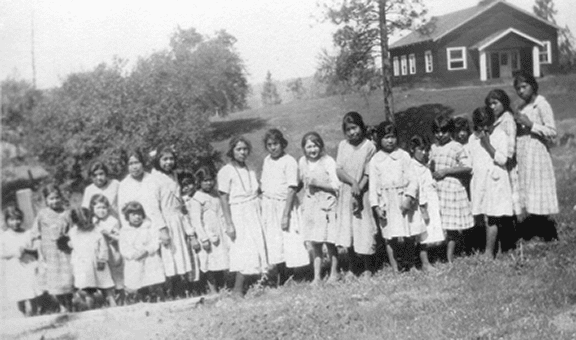
The Northfork Mono accepted and interacted with early settlers of the region, even marrying Anglo settlers. When the Presbyterian church founded a mission and school near the town of North Fork in 1910, the tribe enrolled their young people into the school.
Parents of the children enrolled in the school would travel to North Fork and camp on school grounds to visit their children in between their trips to the Valley and seasonal jobs. The adoption to the school was seen as a method for the Tribe to find a better way of life for their children, that would relieve them of the migratory lifestyle the Northfork Mono had known for so many generations, a life that was filled with hardships.
Throughout the late 1800s and early 1900s, the tribe worked to integrate the new customs and institutions into their traditional ways of life. Lands allocated to them were usually small and barren. Many tried to develop farms, but most failed.
Reservations were set up by the government beginning in 1851. The Fresno Reservations were set up along the Fresno River in and around modern-day Madera and operated until 1859.
Three treaties, signed in 1851, created reservations in and around what is now the City of Madera, were set up to quell the conflicts between natives and non-natives. These conflicts began when disgruntled native allies of James D. Savage, a trader along the Fresno River, attacked and burned his businesses. During one event, three of Savage’s men were killed.
One of the treaty commissioners, Redick McKee, who had arrived to find a solution to the problem, wrote in Feb. 1851:
“So many direct injuries have been inflicted on these Indians by whites, and so many promises (were) made (to) them of restitution and redress, all of which remain unfulfilled, that they have lost all confidence, and are now, we are told, fighting with desperation for their lives and country. The whites have driven most of the southern tribes up into the mountains, from whence, as opportunities serve, they sally out into the valleys to steal and drive off cattle and mules, as an only alternative for starvation.”
Even though the treaties promised to “set apart… to have to hold for the sole use and occupancy of said Indian tribes forever,” the reservations were closed in about 1859.
Despite these difficulties, the Northfork Mono continues to adapt to new ways of life, interacting with settlers and other tribes.