
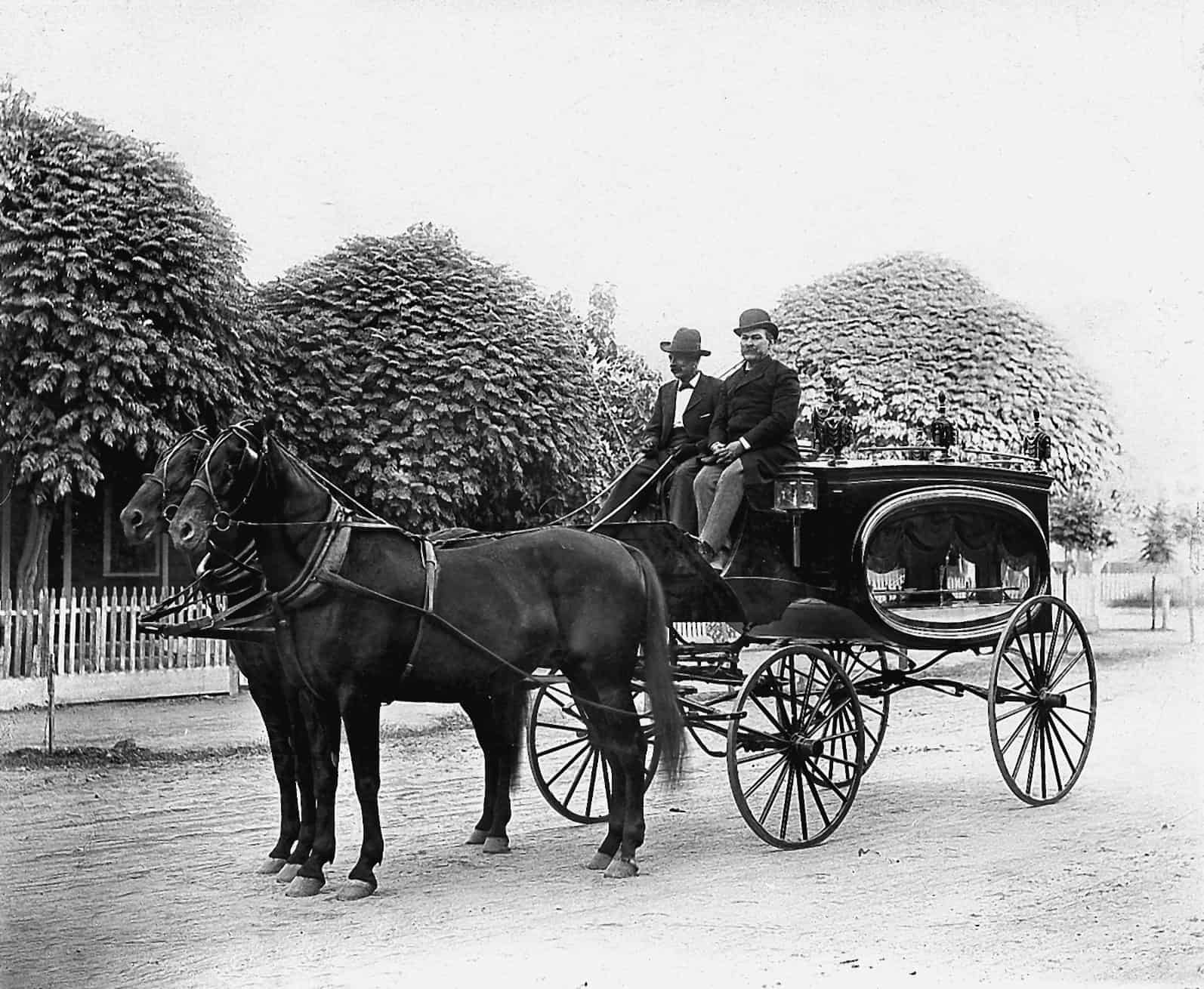
This is a rather sad story. It’s about a man who took up arms to fight in the Civil War. He survived, settled in Madera County, and then was forgotten. His earthly sojourn ended in Raymond in May 1917, and when undertaker Robert S. Jay buried him, there was one, solitary mourner present — no minister, no hymns, no prayers, no flowers, just his embalmer and that one friend.
The old soldier’s name was Alexander Stevens, and he was originally from Illinois. When President Abraham Lincoln put out the call for volunteers in 1861, Stevens answered by joining the 94th Illinois Infantry, Company E.
We don’t know when he moved to California, but he was living in Raymond before the turn of the 20th century.
We also know that he was a member of the Grand Army of the Republic, better known as the G.A.R. It was a national organization of Civil War veterans, and its local chapter was called the Benjamin Harrison Post of the G.A.R.
Every 4th of July the local G.A.R. marched out to Arbor Vitae Cemetery and decorated the graves of its members who had passed, and up to the time of his death, Alexander Stevens dutifully joined his former comrades-in-arms to remember the dead.
Then came his turn. He died on May 15, 1917. Apparently he had no family, for his body was brought to R.S. Jay without funds for a burial. Fortunately, the army had decreed that no Civil War soldier could be buried in a pauper’s grave, so government money was made available to give Stevens a respectable burial. Jay prepared the best casket possible for him, but he could do nothing about the absence of mourners at the funeral.
Jay stated that it was “the first time that he had been called upon to perform the last rites over the remains of an old soldier practically single handed.”
Friday, May 18, 1917, was the day appointed to consign Alexander Stevens to the grave. The lone mourner was Judge E.L. McCapes of Raymond, who came all the way to Madera by buggy to pay his last respects to the man “who at one time had helped to defend his country.”
The Madera newspaper recorded that “a spark of patriotism, a spark of respect for the old war veteran prompted Judge McCapes to cast a silent tear upon the bier of the old soldier.” The Raymond jurist was not only the sole mourner, but he was the only pallbearer, beside Undertaker Jay.
Together the two men lifted the casket into the grave, stood silently for a moment, and as they drove away, the sexton began filling in the hole. In mute silence the undertaker and the lone mourner rode back to town, their mission accomplished, having committed Alexander Stevens to the ages.
Today, the G.A.R. is, of course, defunct. It died when the last Civil War veteran died in the 1950s. However, the military markers over the remains of its members stand as solemn reminders that they also served. Arbor Vitae holds 31 such monuments.
Now, I have been thinking. There has been a lot of talk recently about a new curriculum for public schools. Those in the know say that kids are going to do the kind of work that will make them think more deeply and critically.
Well, let me make a suggestion. Take the students over to the cemetery and let them do some original research on some of Madera’s forgotten heroes from the Civil War. The young detectives could follow the paper trail left by these old soldiers, beginning with their tombstones.
It could turn into an unforgettable experience for everyone, and Alexander Stevens could finally get his due.