
The year was 1868; it was summertime, and three Southern planters were in California searching for a refuge from the ravages of Reconstruction. The Yankees had won the Civil War, and life had grown passionately distressful for the defeated Confederates. They were subjected to what they considered to be a host of social insults and degradation, so they decided to leave Dixie.
When word of their plans leaked out, they were besieged with requests from acquaintances who wanted to join them in their departure from the South. By May of 1868, more than 70 expatriates from Alabama and Mississippi had banded together to move lock, stock, and barrel to California.
Throughout the next few weeks, meetings were held, plans laid out, and leaders were chosen. The settlers voted leadership roles to Judge Samuel A. Holmes, Major C. A. Reading (Mississippi), and L. A. Sledge (Alabama), which explains why we find them in San Francisco in the summer of 1868 searching for land on which they and their compatriots could settle.
The three avaunt couriers sailed from New York to the Isthmus of Panama and then up to San Francisco where they began their search for land that would sustain the group they represented. As fate would have it, they met two land agents who had just what they were looking for. It was isolated, remote, unpopulated and had access to water from a nearby creek. It was the perfect place for the Alabama Settlement (That’s what they called themselves in honor of the elder of the group who left his Alabama plantation, Arcola, to join the group).
The three pioneers preempted land for each of the settlers and sent them a map showing where they would soon be living. The ranches they would build would be nestled along the banks of Cottonwood Creek, a peaceful, gentle flowing stream that would soon put the Alabama Settlement on the map, so the settlers made ready to join their three leaders.
Before the Southern migration could take place, however, a stranger showed up at Cottonwood Creek. His name was George Washington Mordecai, and he had no connection to the Alabama Colony. His appearance at Cottonwood Creek in 1868 was an accident, but it was fraught with irony. He would one day be known as the Prince of Cottonwood Creek.
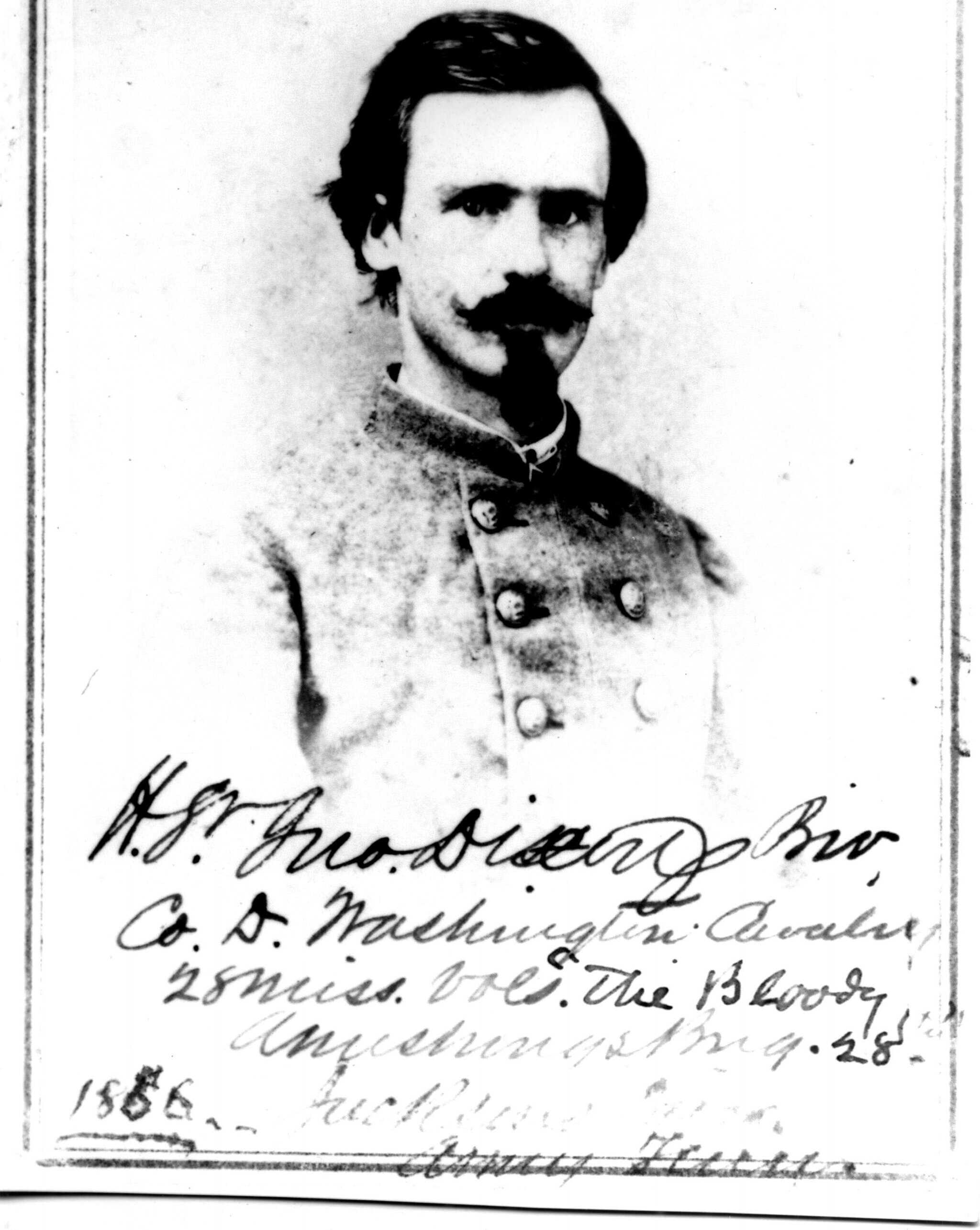
Mordecai was a native of Virginia who served with the Confederate Army for four years during the Civil War. With the defeat of the Confederacy, he removed to Raleigh, North Carolina to superintend one of his uncle’s plantations. In July of 1868 his uncle, after whom he was named, sent him on an errand. Being desirous of acquiring land in California, the elder Mordecai entrusted his nephew with $5,000 and instructed him to invest it in California farmland.
Young George sailed to California, arriving in San Francisco on July 22, 1868. One visit to the land office was all it took to convince George that he ought to take a ride down to Cottonwood Creek. There had to be some reason for so much real estate activity in such a remote region.
When George reached Cottonwood Creek, he met Holmes, Reading, and Sledge who were preparing for the arrival of the settlers they represented. What Mordecai witnessed convinced him to invest his uncle’s money in the Cottonwood Creek enterprise.
By October 1868, the settlers were ready to make their move, and in a month, they were in San Francisco headed by wagons to Cottonwood Creek. Letters from that time testify to the pride the newcomers had in their location on “The Creek.”
It didn’t take the former Rebels long to prepare their homesteads along Cottonwood Creek and to give them exotic — sounding names such as “Cradle of Innocence,” “Hell’s Half Acre,” “Elkhorn,” “Valley Ag Ranch,” “The Christian Ranch,” and “The West Mineral Mile.” Mordecai christened his ranch “Refuge,” and it remains that to this day.
The transplanted Southerners did their best to transform their settlement on Cottonwood Creek into a tiny replica of Dixie. From sunup to sundown they tilled the soil, but in the end it was just too much for them. They were not accustomed to manual labor, and one by one they gave up and drifted off to the populated areas of California in search of employment. Only Mordecai held on to keep the dream on Cottonwood Creek alive.
George Washington Mordecai remained to make the desert blossom, and that’s how he earned the sobriquet, Prince of Cottonwood Creek.