
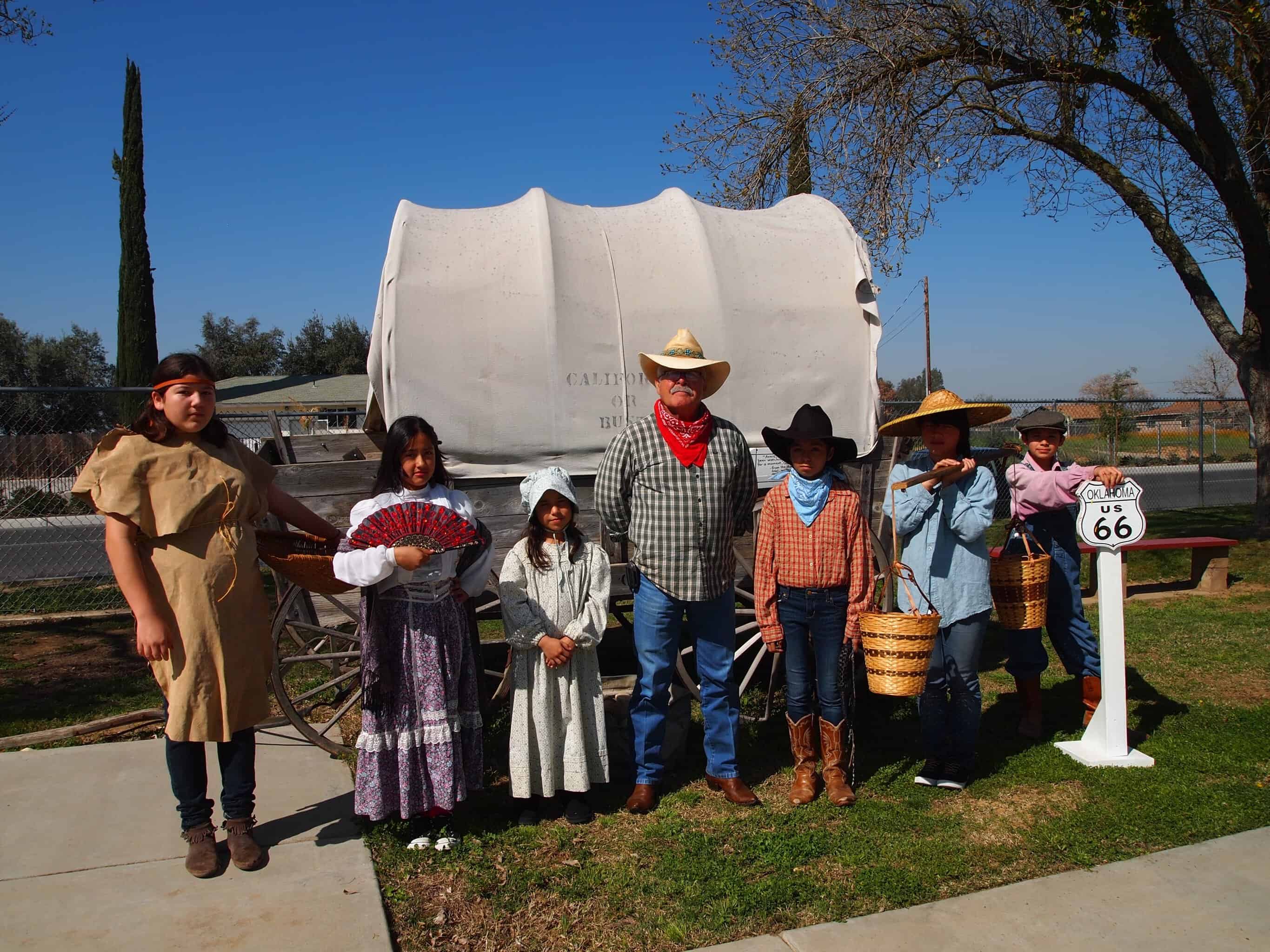
It has been two years since that self-described product of the “Okie” migration, who never earned a high school diploma but became a pathfinder of new trails in the teaching of history, said goodbye to Madera Unified School District.
Ed Gwartney, founder of the James Monroe Children’s Museum, feeling that he had completed his mission in Madera, left it to others to build upon his vision of a unique educational laboratory for teaching California history on Lake Street.
That was in 2016. As far as this writer can tell, however, not much has been happening at the museum since Gwartney’s retirement.
The town with its general store, blacksmith shop, mission, graveyard, and gold mine is still there, but there doesn’t seem to be any student activity around the place — at least not the kind that sent kids in frontier costumes scurrying to and fro, looking for gold, churning butter and performing breathtaking melodramas.
The scenery still stands, but no one plays the parts.
Actually, the old James Monroe Children’s Museum seems to have gone the way of all of the Gold Rush ghost towns, and that’s a shame, especially when one considers it during its heyday when kids from other schools packed the place to experience life in the Old West.
A typical program began with youngsters crowded in the general store to hear Gwartney tell what it was really like to travel the Oregon/California Trail.
He told how mothers gave birth to children; fathers buried them, and marauders dug them up. Dysentery swept through the wagon trains, and loads of precious provisions were dumped to keep the jaded mules and oxen alive.
Entonces, con visiones del “Oeste Real” firmemente grabadas en sus mentes, los visitantes siguieron a Gwartney al exterior para conocer a los estudiantes historiadores de Monroe.
Los bailarines folclóricos entretuvieron a los estudiantes en la antigua misión, y un guía compartió algunos de los puntos destacados de la vida de un neófito bajo los misioneros jesuitas.
The student visitors met Mrs. Jackson and Mrs. Johnson, two women who traveled the trail together in 1846, and learned about the trials on their wagon train.
Los niños conocieron a “Gordon el Diente Grande”, que estaba encerrado en el presidio James Monroe debido a alguna transgresión atroz de la ley de la fiebre del oro. Los visitantes pasaron por el cementerio donde los cuerpos de los recién fallecidos se alejaron de sus lápidas para contar sus tristes historias de miseria.
Los visitantes siempre se sobresaltaban por el retumbar del bombo que llenaba el aire. Un cortejo fúnebre tuvo lugar justo ahí, frente a todos. Tres plañideras caminaban delante del féretro y el sepulturero las seguía.
Cuando los restos fueron colocados apropiadamente en el cementerio, la atmósfera se aligeró un poco ya que los niños Monroe interpretaron un melodrama de antaño titulado “Atraco en la Barranca del Muerto”.”
Each visit to the Children’s Museum always brought visitors face to face with the Monroe docents in several different stations. Everyone made cornhusk dolls and worked with leather to make nametags for themselves.
Había fabricación de cuerdas y búsqueda de oro. También estaba la brigada de cubos y un viaje a la mina de oro. Todos tuvieron que enviar un telegrama y experimentar las tribulaciones de cargar un carro.
All told, visiting the museum was a magnificent experience. By weaving such a complex tapestry of history whereby kids taught kids, it was a time of pure elixir.
Thankfully, these memories are not written in the wind. Madera Unified Superintendent Todd Lile is determined to see that the Old West will live again on Lake Street, and that brings me to my main point.
Why not pay tribute to the man, without whom there would be no children’s museum? Why not name it the Ed Gwartney Center for California History and Performing Arts?
No one, perhaps not even Gwartney, knows for sure just when he conceived the idea of building a western town at Monroe School. Maybe it was when he and his 4th grade classes were building covered wagons that actually were used on trail rides. Maybe it was when he built a tent city on the playground to give his students the feel of life in a gold mining town.
At any rate, by 1997, with the assistance of two fellow teachers and a host of parents, he opened the James Monroe Children’s museum in a portable building, and the rest was history, as they say.
Los partidarios de la educación en todo el estado han reconocido el papel fundamental de Gwartney en el programa del museo. La Oregon/California Trails Association lo nombró Maestro del Año. Ha ganado el Premio Golden Bell para su escuela y, en 2004, el California Council for Social Studies lo nombró Maestro de Primaria del Año. Gwartney ha sido seleccionado dos veces como Maestro Distinguido del Año por sus colegas en James Monroe.
Perhaps it is time for Madera to join others throughout the state and recognize Ed Gwartney for his contribution to education — a perfect way to give this tremendous teacher’s dream a name.